
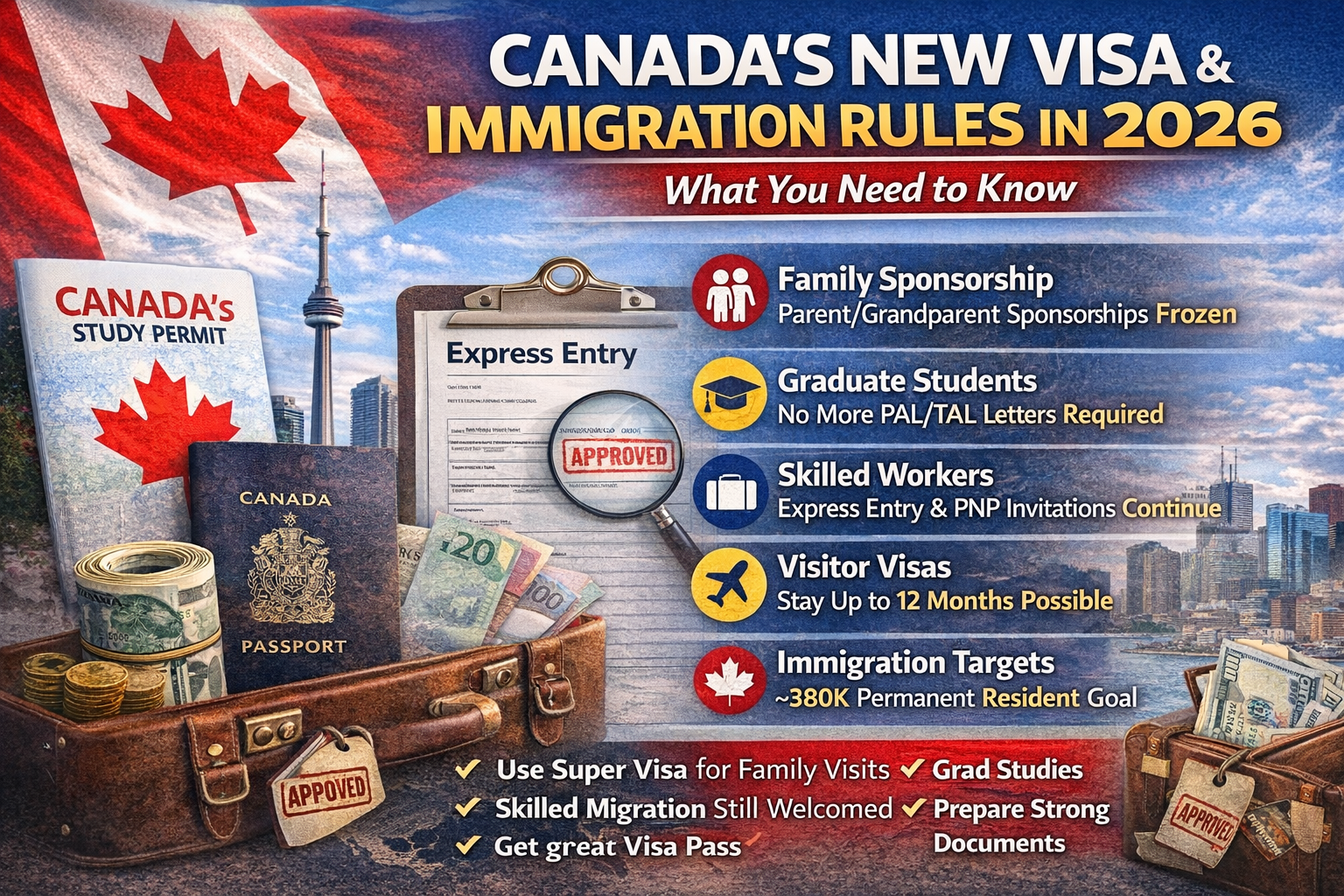
Canada’s New Visa & Immigration Rules for 2026: What You Need to Know
With Canada entering 2026, a fresh wave of immigration and visa policy changes has arrived—affecting students, families, workers, and newcomers hoping to build a life in the country.
Here’s a clear breakdown of what’s new, what’s paused, and what opportunities are opening up this year.
1. Family Sponsorship Freeze: No New Parent & Grandparent Applications
One of the most significant shifts is in family reunification.
- No new applications under the Parents and Grandparents Sponsorship Program (PGP) will be accepted in 2026.
- Immigration Canada will process about 10,000 older applications filed before the end of 2024.
- Families hoping to bring parents or grandparents now have one main option:
✦ Super Visa — allows eligible relatives to stay up to 5 years per entry, with extensions available.
Takeaway: Sponsorship is paused—Super Visa is now the primary route for close family visitors.
2. Student Visa Rules: Easier for Grad Students
Good news for international master’s and PhD students!
Starting January 2026:
- No Provincial Attestation Letter (PAL/TAL) is required for graduate program applicants.
- This rule removes provincial caps and speeds up study permit processing.
- Undergraduate and college applicants may still face tightened admissions due to national intake limits.
Bottom line:
Graduate programs remain wide open—plan early and prepare strong financial documents.
3. Work & Skilled Migration Updates
Canada continues to welcome skilled workers but is refining entry programs.
✦ Express Entry & Provincial Nominee Programs Continue
- Invitation rounds are already underway in 2026.
- Priority candidates include:
✔ skilled trades
✔ healthcare staff
✔ tech professionals
✔ French-language speakers
✦ Start-Up Visa Pause
- The federal Start-Up Visa program is closed to new applicants for now.
- Only candidates with 2025 commitment letters may file—up to June 30, 2026.
✦ Faster Employment Integration
- In Ontario, regulated professionals can start work within 10 business days of credential confirmation.
- The province has banned Canadian work experience requirements in many job postings.
Translation: Skilled workers have momentum—but focus on high-demand roles and provincial streams.
✈️ 4. Visitor Visa Rules: Longer Stays Allowed
Visitors will find Canada more flexible in 2026.
- The standard visitor stay can now extend up to 12 months (instead of 6), depending on:
✔ proof of funds
✔ a clear visit purpose
✔ ties to home country
This makes Canada more attractive for:
✨ long family visits
✨ work-from-anywhere digital nomads
✨ “try before you immigrate” newcomers
5. Canada’s 2026 Immigration Targets
Canada’s multi-year plan is shifting focus rather than reducing opportunities.
- Permanent resident admissions are set at ~380,000 for 2026.
- Priority streams include:
✔ economic and skilled migration
✔ regional labour programs
✔ French speakers outside Quebec
✔ occupations facing shortages
Takeaway: Canada still wants newcomers—especially those filling economic needs.
Quick Overview: What’s Changing in 2026
| Category | What’s New |
|---|---|
| Family Sponsorship | PGP paused—Super Visa preferred |
| Study Permits | PAL/TAL removed for Master’s & PhD |
| Skilled Workers | Express Entry & PNP draws continue |
| Entrepreneurs | Start-Up Visa paused for new applicants |
| Visitor Visas | Up to 1-year stay possible |
| PR Targets | ~380K admissions, skills-focused |
Final Thoughts: Be Proactive in 2026
Canada remains one of the world’s most immigrant-friendly destinations, but the rules are shifting.
To improve your chances:
✔ apply early and prepare complete documents
✔ consider secondary pathways (PNPs, Super Visa, French-language streams)
✔ monitor provincial updates—they change fastest
✔ get professional advice if unsure
With thoughtful planning, 2026 can still be the perfect year to start your Canadian journey.