
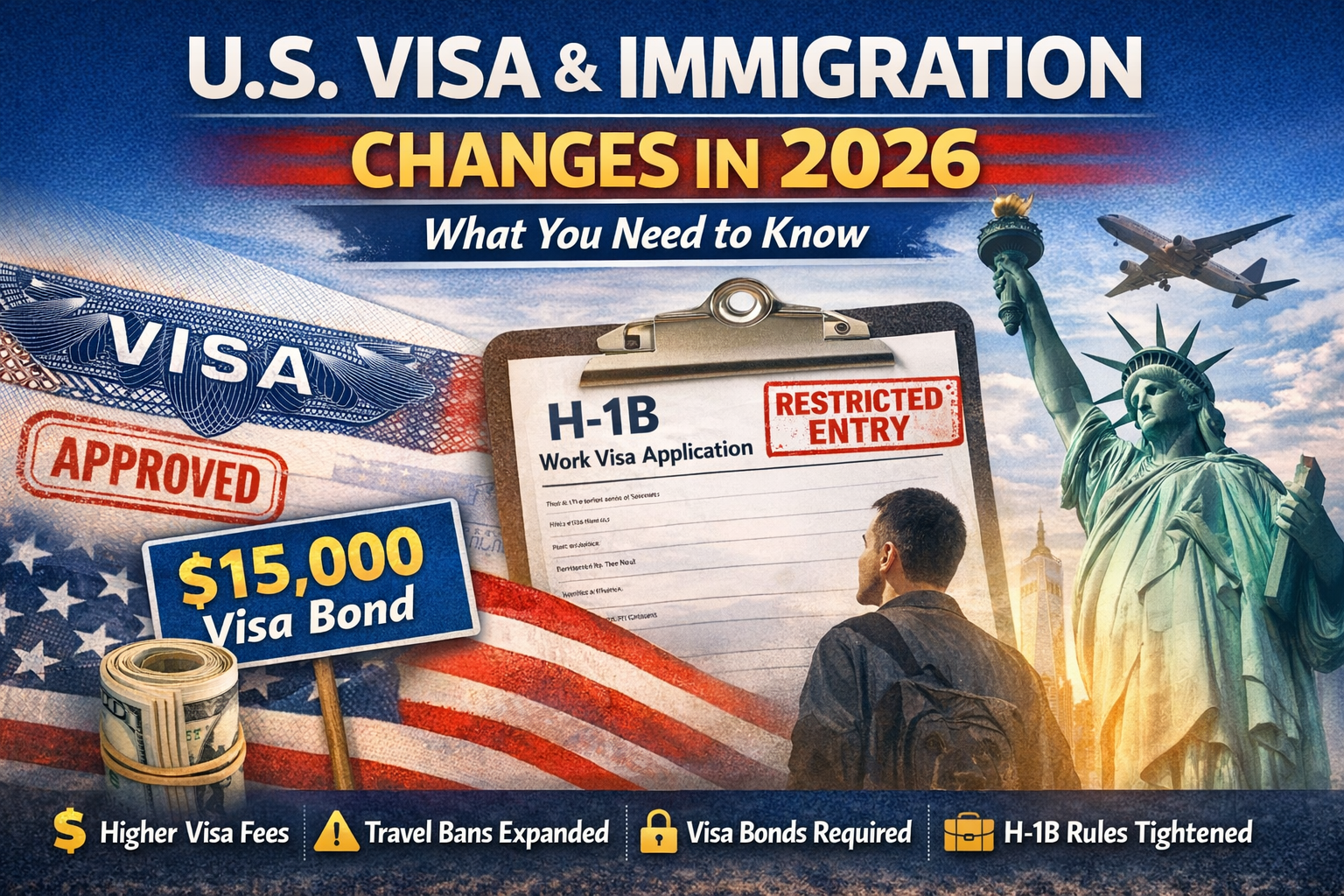
U.S. Visa and Immigration Rules in 2026 — What You Really Need to Know
The United States has ushered in one of its most significant visa and immigration policy shifts in years — and 2026 looks like a turning point for international travelers, workers, students, and families looking to visit or stay in the U.S.
From new fees to expanded restrictions and costly bond requirements, here’s everything you should know before planning a trip or visa application this year.
1. Visa Fees Are Up — In Many Cases Substantially
One of the most impactful changes for almost everyone planning to visit the U.S. is the introduction of a new $250 “Visa Integrity Fee.” This fee applies to most nonimmigrant visa categories — including tourist (B-1/B-2), work (H-1B, L-1), and student (F-1) visas — and is added on top of standard application charges.
This means that visa costs are now significantly higher, making budgeting a key part of travel planning in 2026.
Tip: Plan ahead for this fee — some employers and educational institutions will reimburse it, but you may need to request that in advance.
2. Visa Bonds: Up to $15,000 for Some Travelers
One of the biggest and most controversial changes is the expansion of a U.S. visa bond program.
Under this new policy, citizens from an expanding list of countries may be required to deposit a refundable bond ranging from $5,000 to $15,000 before they are granted a B-1/B-2 visitor visa for business or tourism.
- The bond amount is set during the visa interview with a U.S. consular officer.
- It must be paid before the visa can be issued — but it doesn’t guarantee approval.
- Most travelers will receive a refund only if they follow visa terms — leave on time and comply with all rules.
This requirement now applies to citizens from more than 30 countries, especially in Africa, South and Central Asia, and Latin America. Countries recently added include Venezuela, Bangladesh, Bhutan, Kyrgyzstan, and more.
For many families and business travelers, this bond requirement is a major financial hurdle — particularly in regions where average incomes are far below the bond amounts.
✈️ 3. Expanded Travel Ban for Certain Countries
Alongside higher costs, the U.S. government has expanded its travel ban proclamations, effective January 1, 2026.
Under these restrictions:
- Nationals of certain countries are fully barred from obtaining new visas unless they have a valid visa issued before the ban.
- Others face partial suspensions — especially for visitor, student, and exchange visas.
These measures affect a wide range of countries, particularly in Africa, the Middle East, and the Caribbean. Dual nationals, lawful permanent residents (green card holders), and certain exempt categories may still be able to enter, but rules are complex.
4. H-1B and Work Visa Changes
While student visas and tourist travel get a lot of attention, work visas — especially the H-1B — are also being reshaped:
- Premium processing and other associated fees for work visas are increasing in early 2026.
- The lottery system used to allocate H-1B visas has been revised to prioritize higher-paid and specialized workers, beginning in early 2026.
- Some proposed surtaxes (like widely discussed high fees) have been clarified to not apply retroactively to existing work visa holders.
This means employers and applicants must adapt — especially if you are applying from outside the U.S. or transferring employment.
5. Students and Long-Term Stays
International students also face changes:
- In-person interviews and detailed background checks are now routine for almost all student visa applicants.
- Visa issuance timelines may be longer due to enhanced security screening.
This makes early planning and documentation preparation more important than ever if you’re applying for an F-1 or J-1 visa.
Final Thoughts: Plan Ahead and Prepare
The 2026 visa and immigration environment is marked by higher costs, tighter controls, and more complex entry rules.
Before you apply:
✔ Check whether your country is subject to visa bond requirements
✔ Budget for new fees like the Visa Integrity Fee
✔ Expect in-person interviews and enhanced background screening
✔ Work with lawyers or official advisors for complex cases
✔ Monitor U.S. government sites (State Department, DHS, USCIS) for updates